Amid the topsy-turvy art market of 2026, what should we read into a mega-gallery downsizing its real-estate footprint? The best answer is that it greatly depends on the details—and for any market watcher wary of confusing the noise with the signal, recent events have reinforced the importance of keeping one’s eyes and ears finely tuned.
On the surface, all four of the so-called “mega-galleries”—Gagosian, Hauser & Wirth, Pace and David Zwirner—have re-evaluated their real-estate commitments in the past 18 months. In May 2025, Artnet News confirmed that Hauser & Wirth’s co-founders had sold (for a reported $10.5m) the 69th Street townhouse that doubled as the gallery’s Upper East Side location from 2009 until April 2024. The remaining moves took place in a flurry this summer.
First, the Financial Times verified in June that Pace had begun searching for a smaller London space to replace its longtime location at 5 Hanover Square, according to a spokesperson for the gallery. The next month, Artnet News reported that David Zwirner would move out of its Upper East Side haunt, also on 69th Street. (A gallery spokesperson said that it was “always our plan to leave” the neighbourhood after the completion of its property “overhaul” in Chelsea last year.)
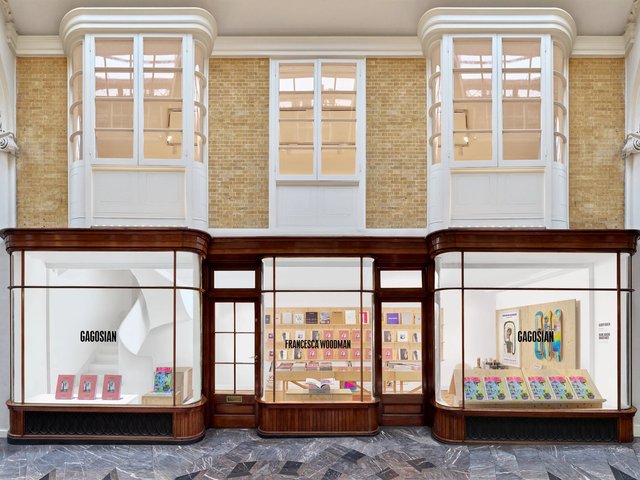
About ten days later, yours truly reported that Gagosian had opted out of one of its three London locations, at 28–29 Burlington Arcade, and planned to depart its lone gallery in Basel. (At the time, a spokesperson for the gallery said that Gagosian was exploring other real-estate opportunities in the Swiss city.)
It all sounds troubling when presented in those terms, doesn’t it? Though perhaps not quite as much when you take a broader view.
Even-handed, level-headed
On the one hand, at least 26 dealers downgraded their real estate or closed completely between 1 January and 21 July 2026, based on my analysis. Now, at least on the surface, even the apex players look vulnerable.
“The softening on the primary market has impacted every gallery, regardless of size,” says the Dallas-based art adviser Adam Green. “The difference is that the top galleries have more levers to pull, whether that’s closing a location or cutting staff.”
In 2014, the outspoken Belgian collector Alain Servais coined the phrase “grow or go” to describe the art industry’s burgeoning fixation on scale at any cost. He sees the recent spate of dealers downsizing as a necessary but insufficient condition to restoring the trust many collectors have lost in primary-market galleries, as a result of what he sees as those galleries’ attempts to pass the costs of their operational overreach onto their clients. “The art market infrastructure is sized for selling a lot of rubbish at high prices,” Servais says. He adds that he feels “more dramatic rightsizing will be necessary, particularly to compete with more efficient auction houses”.
But not all cutbacks are created equal. All four mega-galleries have reconsidered their physical footprints in some respect, but Pace is the only one to significantly trim its staff count or its network of artists and estates—let alone to do both. It would also be misleading to note Hauser & Wirth’s Upper East Side exit without mentioning its expansion elsewhere. The firm will open a new permanent space in Palo Alto on 3 October, keeping its count of worldwide galleries at a hearty 17.
This example underscores that geographical spread is crucial to evaluating galleries’ real-estate moves. It is one thing if, say, a US-headquartered dealer shutters its only overseas location; it is entirely another if a global behemoth like Gagosian continues operating in more than a dozen locations across seven countries after giving up one or two others. This is especially true if those one or two began as pop-up spaces on opportunistic short-term leases, as its Burlington Arcade and Basel venues did.
Some industry insiders regard Hauser & Wirth, Gagosian and Zwirner’s real-estate revisions as reasonable moves to reduce non-essential overhead costs during prolonged market uncertainty. This is the same impulse motivating dealers at lower commercial tiers to make what are, relative to their size, more dramatic moves; the mega-dealers just attract more attention owing to their outsized market share and visibility.
I agree with Servais’s belief that, for galleries, more extreme resizing will be needed. The mega-dealers’ location reshuffle is certainly a wake-up call but hardly the sector-wide death knell that gallery closures are often interpreted as, no matter the circumstances. If we cannot navigate the line between those outcomes, then our own inflexibility is holding back the market, too.